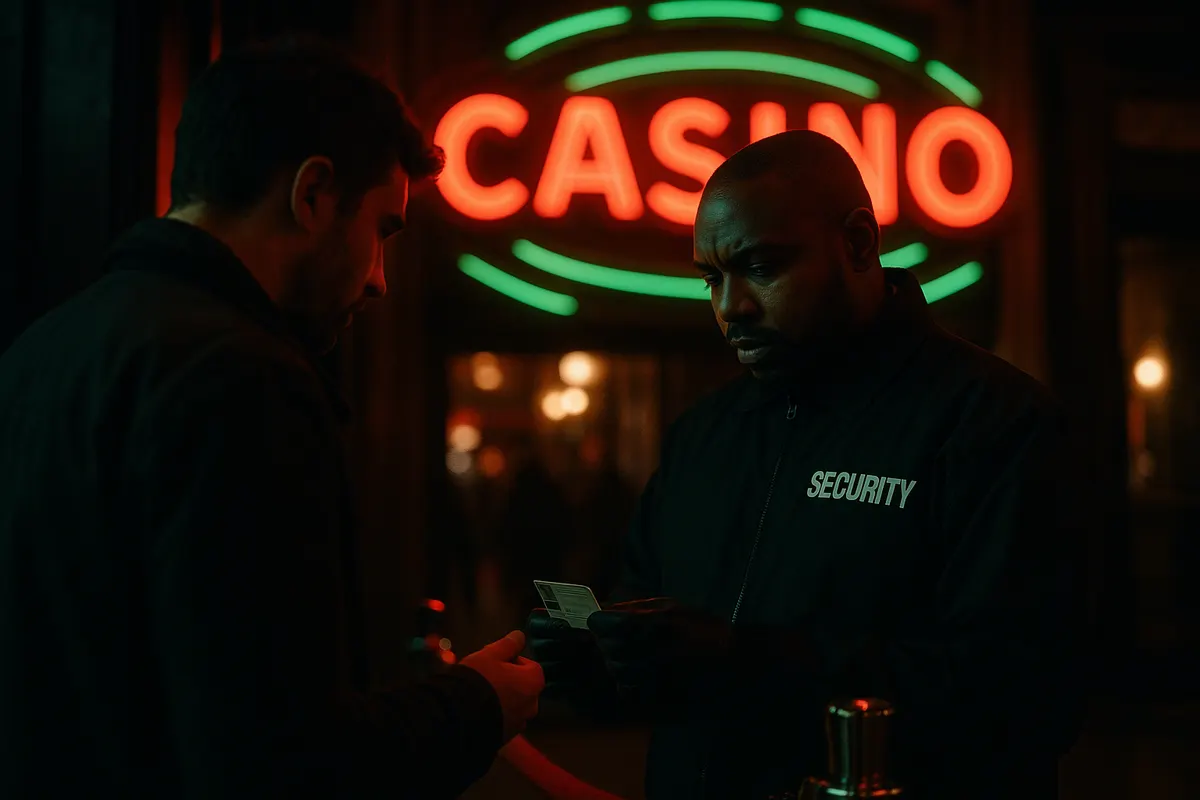
Should a 19-year-old walk away from a slot machine with a criminal record?
New Jersey lawmakers are seriously debating that question right now, and the answer they land on will shape how underage gambling laws get written elsewhere. Senate Bill 597 would take underage gambling out of the criminal code entirely and treat it as a civil offense instead: a fine, not a misdemeanor, and no criminal record attached to an 18, 19 or 20-year-old who slips onto an Atlantic City gaming floor.
To be clear about where this article stands: nobody under the legal age should be gambling, full stop. The argument in Trenton isn’t about whether it’s wrong. It’s about what punishment actually reduces harm, and who the law should be aimed at in the first place.
What SB597 actually does
Sen. Jim Beach (D-Camden) has been pushing this idea in Trenton for four years. His current version, SB597, is cosponsored by two Democrats and two Republicans, and it was recently referred to the Senate Judiciary Committee, where one cosponsor, Sen. Kristin Corrado (R-Caldwell), has a seat. New Jersey is one of only five states whose legislature is still in session, and it isn’t scheduled to adjourn until Dec. 17, so the bill has runway.
Under the bill, an underage person caught gambling would face an escalating civil fine: up to $500 for a first offense, $1,000 for a second, and $2,000 for a third and any after that. The money wouldn’t disappear into general revenue. It would go to the Department of Human Services for compulsive gambling prevention, education and treatment programs.
The statute wouldn’t only cover Atlantic City casinos. It would also apply to simulcast facilities and the sportsbooks inside them. And it reaches further than the minor: casino employees who knowingly let an underage person gamble would face the same civil penalties, as would a parent or caretaker of legal age who helps a minor place a bet.
Criminal charge vs civil fine: the two approaches side by side
The clearest way to weigh this is to put the current law next to the proposal. The dollar figures aren’t wildly different. The legal consequence is.
| Feature | Current New Jersey law | SB597 proposal |
|---|---|---|
| Classification | Disorderly persons offense (low-level misdemeanor) | Civil penalty |
| Criminal record | Yes | No |
| Fine structure | Minimum $500; maximum $1,000 for each violation after the first | Up to $500, then $1,000, then $2,000 for third and subsequent offenses |
| Where the money goes | Not directed to problem gambling services | Department of Human Services for prevention, education and treatment |
| Who else is liable | Focus on the underage gambler | Also employees who knowingly allow it, and parents or caretakers who assist |
Notice what happens at the third offense. The proposal is actually harsher on repeat behaviour than the current ceiling of $1,000. So “decriminalize” doesn’t mean “go easy.” It means the penalty stays financial and administrative rather than following someone into job applications and background checks.
The case for taking it out of the criminal code
Three arguments do most of the work here, and they’re reasonable ones.
- Proportionality. A disorderly persons offense is minor in courtroom terms but permanent on paper. Twenty years later, a record from one night at a blackjack table can still show up in a screening for a licence, a lease or a job in a regulated industry, including gaming itself.
- Funding the fix. Routing fines to compulsive gambling prevention and treatment ties enforcement money directly to the harm it’s meant to address. A minor who’s already showing risky behaviour is exactly the person you want inside a treatment pipeline rather than a court docket.
- Aiming up the chain. Extending liability to employees who knowingly allow underage play, and to adults who help, acknowledges something enforcement data has shown for years: the operator’s door is where the failure usually happens.
The case for keeping it a crime
The counterargument deserves fair treatment. A misdemeanor carries a weight that a fine doesn’t. If you’re 19 and the worst realistic outcome is a $500 bill, the deterrent softens, and deterrence is doing real work with a group whose brains are genuinely more sensitive to gambling reward loops than an adult’s. There’s also a practical worry: civil penalties can be quietly waived, appealed or never collected, which turns a written rule into a paper one.
And there’s the fairness question in reverse. Casinos are held to a strict standard under the New Jersey Casino Control Act. If the person who showed a fake ID faces only a fine while the venue faces six-figure regulatory action, some operators will argue the balance has tipped too far.
Where age-limit enforcement really lives
Here’s the part worth sitting with if you follow this industry: minors almost never get caught by the minor-facing rule. They get caught, or don’t, at the door.
Atlantic City casinos are legally obligated to keep the gaming floor restricted to people 21 and older. Security checks identification at all access points and watches the floor for anyone who looks out of place. The working practice at many venues is to card anyone who appears to be 30 or younger, which sounds generous until you remember that counterfeit IDs have gotten very good. Scanners help. They don’t solve it.
When the system fails, the New Jersey Division of Gaming Enforcement handles it, and the penalties land on the operator. The largest underage gambling fine the DGE has issued came in November 2008, when Bally’s was ordered to pay $157,500 after regulators determined the casino had regularly allowed an underage woman to gamble. Before that, the record belonged to Borgata: a $105,000 penalty in February 2008. Those numbers tell you where the regulator thinks responsibility sits.
Online is a different failure mode
On a casino floor, enforcement is a person looking at a face. Online, it’s data. A regulated New Jersey operator has to verify identity before it lets you cash out, and usually before you play: name, date of birth, address and identity documents checked against records, plus geolocation to confirm you’re inside state lines. That KYC process catches age fraud far more reliably than a bouncer can, because a fake plastic card doesn’t help you match a real identity record.
The weak points online are different ones: minors using a parent’s verified account, a parent’s payment card, or a device where a logged-in session was left open. That’s precisely the gap SB597 addresses when it makes an adult who assists an underage gambler civilly liable. If you have a gambling account and teenagers in the house, treat your login and payment methods the way you’d treat car keys.
The verdict
On balance, the civil-penalty model is the better instrument, with one condition: the escalating fines have to be collected and the adult-facing liability has to be enforced, not decorative.
The reason is simple. A criminal record doesn’t stop a 19-year-old from walking into a casino, because the record only exists after the fact and no minor is doing that calculation at the door. What stops underage play is an ID check that works, staff who’d rather turn away a borderline customer than risk a DGE hearing, and verification systems online that make identity fraud genuinely hard. The punishment aimed at the minor is the last line, not the first, and a fine that funds prevention programs does more measurable good than a misdemeanour that follows someone into their thirties.
What the bill gets most right is the direction of accountability. Underage gambling laws that treat the minor as the primary offender are looking at the wrong end of the transaction. Someone let that person through, sold them a chip, or left an account logged in.
What it means in practice
If you follow regulation, watch three things as SB597 moves through the Senate Judiciary Committee:
- Whether the adult liability clause survives. The provisions covering employees and parents are the most substantive change in the bill. They’re also the most likely to get negotiated down.
- Whether other states copy the structure. Minimum gambling age varies across the US, commonly 18 or 21 depending on the state and the product, and so does the penalty for breaking it. A bipartisan New Jersey bill that fines instead of charges gives other legislatures a template.
- Whether compliance spending follows. If the law leans harder on venues and verification, operators shoulder more of the cost of getting age checks right, and that shows up in how strict the front door and the onboarding flow feel.
For the average reader, the practical takeaway is small and unglamorous: the age limit at a licensed operator is not a formality you can charm your way past, and the person most exposed if a minor gambles on an adult’s account is the adult. Keep your credentials and payment methods to yourself.
Common questions
Is underage gambling a crime in New Jersey right now?
Yes. Under current law it’s a disorderly persons offense, a low-level misdemeanor, with a minimum fine of $500 and a maximum of $1,000 for each violation after the first. It creates a criminal record. SB597 would replace that with a civil penalty.
What is the minimum gambling age in Atlantic City?
21. Casinos operating under the New Jersey Casino Control Act must restrict gaming floor access to people aged 21 and over, and security is responsible for checking identification at entry points and monitoring the floor.
How do casinos verify age?
In person, through ID checks at access points, with staff commonly instructed to card anyone who looks 30 or younger. Online, through KYC identity verification against official records plus geolocation checks, which is harder to defeat with a forged document.
Who gets fined when a minor gambles?
Under the current framework, regulatory penalties fall mainly on the operator. The DGE’s largest underage gambling fine was $157,500 against Bally’s in November 2008, after Borgata’s $105,000 penalty earlier that year. SB597 would add civil penalties for employees who knowingly allow it and adults who assist.
Gambling is restricted to adults of legal age in your jurisdiction and carries a built-in house edge, meaning players lose money over time on average. If gambling is causing problems for you or someone close to you, contact a licensed problem gambling helpline or use the deposit limits, cool-off and self-exclusion tools every regulated operator is required to provide.